
Preapproval to Closing: Buyer Timeline in Kentucky
Timeline for Kentucky home buyers: expect 1–3 business days for preapproval, 30–45 days from accepted offer to close, 3–4% closing costs.
- Agent Selection
- Local Market
- Real Estate

I’d plan for 1–3 business days for preapproval once documents are complete and 30–45 days from an accepted offer to closing on a financed Kentucky home purchase. Start by gathering your financial records and budgeting 3%–4% of the purchase price for closing costs, separate from your down payment.
Here’s the path I’d follow:
- Get ready to shop: Confirm your budget, choose a local Realtor, and review the buyer agreement.
- Make an offer: Use recent sales to guide your price, and set deadlines for deposits, inspections, financing, and closing.
- Complete the checks: Schedule inspections, settle repair requests, and respond to appraisal, title, loan, and insurance issues.
- Prepare to close: Review final costs, verify payment instructions, complete the walkthrough, and confirm funding and key delivery.
My main rule: <u>keep every deadline on one calendar</u>. These steps often overlap, and missing documents or property issues can push closing back. Your contract and possession terms - not signing alone - determine when you can move in.
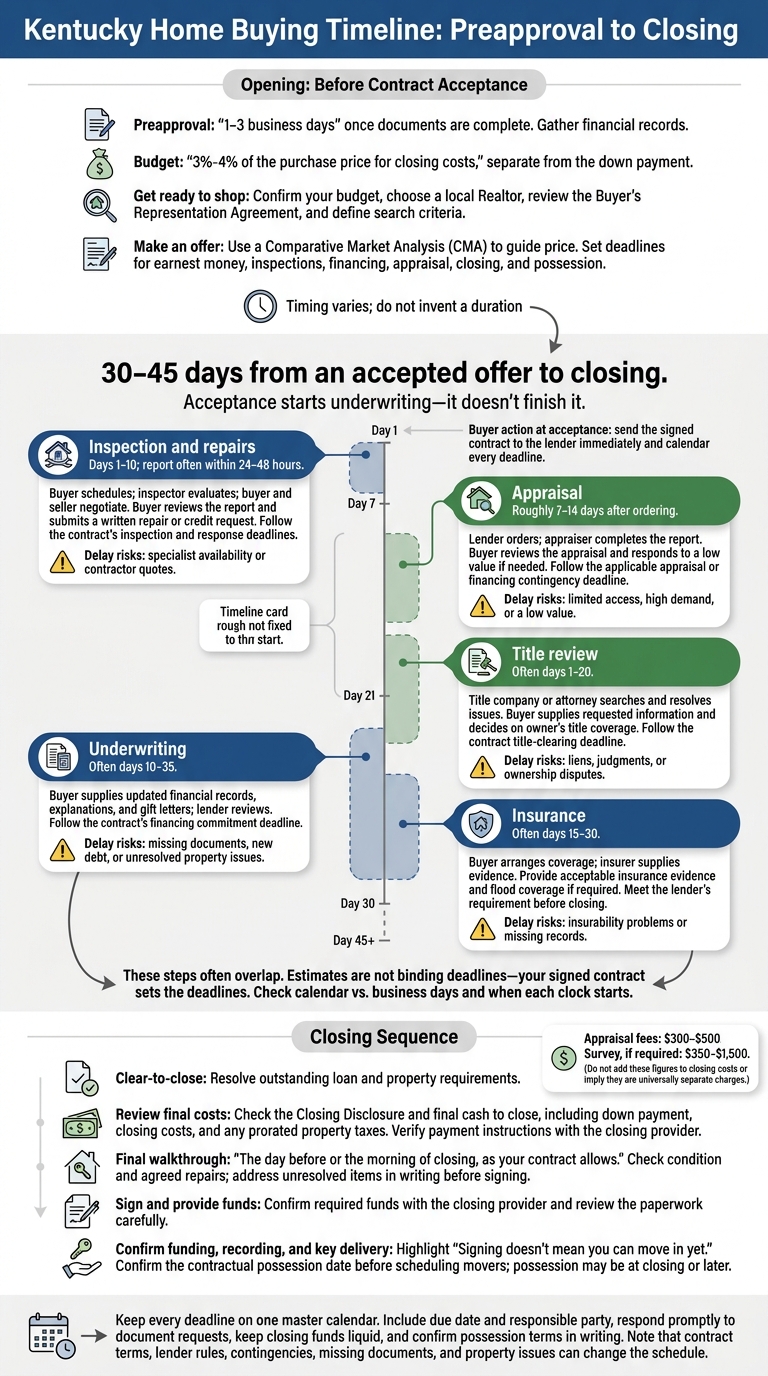
Kentucky Home Buying Timeline: Preapproval to Closing
Choose a Realtor, Find a Home, and Make an Offer
Choose Your Realtor and Search Criteria
Look for a Realtor who knows the local market, responds promptly, and has time for showings. Confirm they’ve worked in the state where you’re buying - Kentucky or Indiana. Forms, disclosures, and closing practices differ between the two.
Read the Buyer’s Representation Agreement before signing. Check the services, exclusivity, compensation, and any balance you may owe if the seller-paid commission falls short.
Agent Intro can match buyers in Greater Louisville and Southern Indiana with a local Realtor.
Define your preferred location, commute limits, property type, acceptable condition, and maximum price. Then agree on a regular check-in schedule. Your Realtor handles tours and negotiations, but inventory and seller response times still affect the pace. Once you’ve set your search criteria, use the CMA to guide your offer price and terms.
Set Your Offer Terms and Deadlines
Before choosing an offer price, ask your Realtor for a Comparative Market Analysis (CMA) based on recent sales and active listings. Set a deadline for the seller to respond, and review all the terms - not just the price.
| Offer term | What it controls | Buyer decision | Time risk |
|---|---|---|---|
| Earnest money | Deposit showing commitment to the purchase | Amount and delivery deadline | Late delivery or default can put funds at risk. |
| Financing contingency | Loan protection during approval | Loan type, down payment, and approval deadline | Protection may expire before approval is complete. |
| Inspection period | Time to inspect and negotiate findings | Enough time for inspections and specialist follow-ups | Short windows can leave issues unresolved. |
| Appraisal contingency | Protection if the appraisal comes in low | Whether to cover an appraisal gap with cash | A shortfall can delay or derail financing. |
| Closing date | Target completion date | Confirm the date works for the lender and title company | Tight schedules leave little room for underwriting or title delays. |
| Possession | When you receive access and keys | At closing or later | Delayed possession affects moving and insurance arrangements. |
Before submitting your offer, confirm inspection, appraisal, and closing deadlines with your inspector, lender, and title company. After acceptance, your focus shifts from negotiating terms to meeting deadlines.
Track Deadlines After Offer Acceptance
Send the signed contract to your lender immediately and put every deadline on your calendar. Acceptance starts underwriting - it doesn’t finish it.
Track earnest money, inspections, financing deadlines, and closing according to the contract. Check whether each deadline uses calendar or business days and exactly when its clock starts.
First-Time Kentucky Home Buyer Roadmap: Credit, Down Payment & Pre-Approval (2026)
Complete Property Reviews and Loan Approval
Inspections, appraisal, title review, underwriting, and insurance usually happen at the same time during the 30–45-day contract period. Your signed contract sets the deadlines. Each step checks whether the property, loan, or title is ready for closing. Use this table to track timing, responsibilities, and possible delays.
| Milestone | Estimated timing | Binding deadline | Buyer deliverable | Responsible party | Common delay |
|---|---|---|---|---|---|
| Inspection and repairs | Days 1–10; report often within 24–48 hours | Contract’s inspection and response deadlines | Review the inspection report and submit a written repair or credit request | Buyer schedules; inspector evaluates; buyer and seller negotiate | Specialist availability or contractor quotes |
| Appraisal | Roughly 7–14 days after ordering | Applicable appraisal or financing contingency deadline | Review the appraisal and respond to a low value, if needed | Lender orders; appraiser completes report | Limited access, high demand, or a low value |
| Title review | Often days 1–20 | Contract title-clearing deadline | Supply requested information and decide on owner’s title coverage | Title company or attorney searches and resolves issues | Liens, judgments, or ownership disputes |
| Underwriting | Often days 10–35 | Contract’s financing commitment deadline | Supply updated financial records, explanations, and gift letters | Buyer supplies records; lender reviews | Missing documents, new debt, or unresolved property issues |
| Insurance | Often days 15–30 | Lender’s requirement before closing | Provide acceptable insurance evidence and flood coverage if required | Buyer arranges coverage; insurer supplies evidence | Insurability problems or missing records |
Schedule Inspections and Resolve Repair Requests
Book inspections as soon as your offer is accepted. That gives you time to review the report and respond before the inspection period ends.
Focus on major defects and safety issues, and document any repair or credit agreement in a signed addendum. Schedule specialist evaluations right away so you don’t lose time waiting for appointments or contractor quotes.
Respond to Appraisal and Title Issues
Appraisal fees typically run $300–$500. Timing depends on property access and local demand. If the appraisal comes in low, you can renegotiate, cover the gap, or exit under the applicable contingency.
The title company or attorney checks ownership, liens, mortgages, and judgments. Ask early about anything that must be cleared before closing.
Owner’s title insurance protects your ownership, while lender’s title insurance protects the lender. Owner’s coverage is usually optional but recommended. If a survey is required, budget about $350–$1,500.
Respond to Underwriting and Arrange Insurance
Send requested income and account records, explanations for deposits, and gift letters promptly so underwriting can reach clear-to-close.
Arrange homeowners insurance early and have proof sent to the lender. If flood insurance is required, arrange that coverage too. Until clear-to-close, avoid taking on new debt, keep requested documents moving, and resolve any appraisal, title, or insurance issues.
As the lender gets close to clear-to-close, attention shifts to final figures, signing, and funding.
Check Final Costs and Close on Your Home
Once you receive clear-to-close, check your final numbers and get ready to sign.
Review Your Closing Disclosure and Verify Funds
Review the final loan and title documents with your closing attorney or title company. Confirm your final cash to close, including your down payment, closing costs, and any prorated property taxes. If something looks off, ask for an explanation before closing.
Once the disclosure matches your lender’s figures, complete your final walkthrough before signing.
Complete Your Walkthrough and Prepare to Sign
Schedule your walkthrough for the day before or the morning of closing, as your contract allows. Test the appliances and lights, and check that the seller hasn’t left personal belongings or debris behind. Address unfinished repairs before signing, and put the next step in writing.
Confirm with your closing provider what funds you need to bring, then bring your cash to close at signing. Read the paperwork carefully and ask questions about anything you don’t understand.
Confirm Funding, Recording, and Key Delivery
Signing doesn’t mean you can move in yet. Funding and recording still need to happen before the keys are released. Confirm your possession date before scheduling movers.
Conclusion: Keep Your Timeline on Track
Once underwriting is nearly complete, timing becomes the focus. The 30–45-day financed closing window starts at contract acceptance. Your offer’s terms set the deadlines for inspections, appraisal, title review, and loan approval between acceptance and closing.
Keep every remaining task on one master deadline calendar, with its due date and the person responsible. Include contract deadlines and final closing checks. Respond promptly to document requests, and stay available for daily contact during the final week.
As closing approaches, focus on your funds and possession terms - not just your task list. Keep your closing funds liquid, and confirm possession terms in writing before planning your move. Your contract, lender rules, and contingencies - such as a home-sale contingency - determine the actual schedule.
FAQs
What documents do I need for preapproval in Kentucky?
To get mortgage preapproval in Kentucky, you’ll need to fill out a loan application and submit documents that verify your income, employment history, and assets. Lenders typically ask for recent pay stubs, W-2 forms, tax returns, and bank statements.
Each lender’s requirements may differ, so check with yours to confirm which documents you need. Contacting a lender early helps you understand how much you can borrow before you start looking for a home.
What happens if I miss my closing deadline?
Missing your closing deadline may give the seller grounds to cancel the purchase agreement because you haven’t met a contract requirement. Closing dates and other contract milestones are legally binding. If a delay occurs, contact your real estate agent right away.
Your agent may need to work with the seller on an addendum to extend the deadline. The seller must agree to the extension.
Can my loan be denied after preapproval?
Yes. Preapproval isn’t final approval. It means a lender has reviewed your initial financial information. Final approval still depends on the property appraisal, a final review of your finances, and underwriting.
New debt, changes in employment, or appraisal issues can affect the lender’s decision. Your lender will let you know when you’re cleared to close.
Ready for a thoughtful introduction?
Tell us about your move. Get one carefully selected introduction — free for buyers and sellers.
Find my agent ↗